


Learn how title loans and unsecured loans differ, including collateral requirements, repayment responsibilities, and what happens if you default. Explore what to review in each loan agreement to compare costs and understand the risks before borrowing.
The main difference between title loans and unsecured loans is what backs the loan. A title loan uses your vehicle as collateral. If you default, the lender may be able to repossess it. An unsecured loan doesn’t require you to pledge a vehicle or another asset, butyou’re still responsible for paying back what you owe.
If you’re comparing offers, we’ll walk you through what tolook for in the agreement so you can see what each option would cost and whatyou’d be putting at risk.
Is a Title Loan Secured or Unsecured?
A title loan is a secured loan. Your vehicle backs the loan,and the lender places a lien on the vehicle’s title. A lien gives the lender alegal claim on the vehicle under the terms of the agreement. It can also affectyour ability to sell or transfer the vehicle before the loan is paid off.
You may be able to keep driving while you repay the loan asagreed. That doesn’t remove the lien. The Consumer Financial Protection Bureau’s report on vehicle title lending explains that a lender may repossess the vehicle if the borrower doesn’t repay as agreed. Check your agreement for what counts asdefault and what steps the lender may take.
For an unsecured loan, you don’t pledge a specific asset. If you miss payments, the lender may still seek to collect what you owe. Our guide to secured and unsecured loans covers more examples of both types.
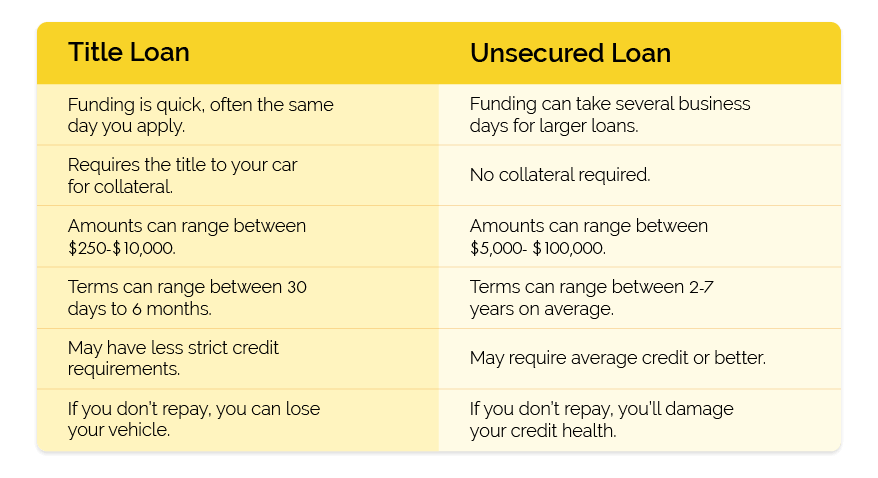
How do Title Loans and Unsecured Loans Compare?
Start with the written terms. Having a vehicle to pledgedoesn’t tell you how much you can borrow, what rate you’ll get, or how longyou’ll have to repay. A title lender may consider the vehicle’s value and titlestatus. An unsecured lender may consider factors such as your income, credithistory, and existing debts. Requirements vary by lender and product.
Compare how much you’d actually receive, the annualpercentage rate (APR), any fees, and the total you’d repay on schedule. Thenlook at the individual due dates. Two offers can cover the same expense andstill put very different demands on your budget.
Say you’re comparing two offers for a home repair. The titleloan has a smaller payment and a longer repayment schedule. The unsecured offerhas larger payments and ends sooner. The smaller payment might be easier to fitinto your budget, but you’d need to check the total repayment before decidingwhich offer costs less. You’d also need to weigh what it would mean to pledgethe car you use for work.
Check the terms for missed payments, too. Ask when a late fee could apply, what the lender considers default, and what it can do if theaccount remains unpaid. If you’re looking at our options, you can review Check City title loan details and check state rates and terms.
How is a Title Loan Different from a Payday Loan?
A title loan uses your vehicle as collateral. A payday loan is generally unsecured. The CFPB’s guide to payday loan collateral explains that a lender may ask for a postdated check or permission to debit an account. That’s a way to collect payment; it doesn’t mean you’ve pledged yourvehicle.
Both products can have repayment terms that vary by lender, product, and state. If you’re researching Check City payday loan details, look for the amount due, the payment schedule, and the cost in your state.
Get the Loan You Need From Check City
The right loan for you will depend on your unique financial situation. Both title loans and unsecured loans have significant advantages and drawbacks.
With years of experience in the financial industry, CheckCity can help you sort through the options and choose the best fit for yourcircumstances. Reach out to one of our friendly, knowledgeable agentstoday.
Before accepting any offer, check that you can cover thepayments alongside rent, groceries, transportation, and other essentials. Ifthe expense can wait or the company you owe offers a payment plan, comparethose options too. If you’re considering a title loan, give yourself time todecide whether you’re comfortable putting your vehicle up as collateral.
This content is for informational purposes only and does not constitute financial or legal advice. Loan products, terms, amounts, rates, fees, and funding times may vary by state and applicant qualifications. All loans are subject to approval and verification under applicable law. Check City is a licensed lender in each state where it operates. Loans are intended for short-term financial needs only. Please borrow responsibly.


